
Blog

How to Choose a Pneumatic Pressure Calibrator?

Choosing a Pneumatic Pressure Calibrator is not simply a matter of selecting the highest advertised accuracy. The right instrument must match the pressure range, medium, connection type, workload, and required uncertainty. A laboratory technician may need fine control and detailed documentation. A field engineer may value battery life, rugged housing, and fast stabilization more.

Lord Kelvin’s measurement principle remains relevant: “If you cannot measure it, you cannot improve it.” His words guide this discussion, although modern calibration work demands more than a numerical reading. A dependable Pneumatic Pressure Calibrator should support traceable results, controlled pressure generation, and clear uncertainty evaluation. Look beyond the display. Check sensor stability, pump performance, leak resistance, resolution, and calibration certificates. A bright screen cannot compensate for poor repeatability.

Real conditions expose weak choices. Dust can enter fittings. Gloves can make small controls difficult. A tiny pressure leak may become obvious during a long test. These details matter.

Not every application needs the most expensive model. That assumption deserves questioning. Excessive range can reduce practical resolution, while insufficient range creates safety and reliability concerns. The selection process should compare manufacturer specifications with actual operating habits, reference standards, maintenance skills, and environmental conditions. Experience helps here, but experience can also become overconfidence. This guide examines the evidence carefully, helping readers choose a Pneumatic Pressure Calibrator that is accurate, usable, maintainable, and defensible during audits.
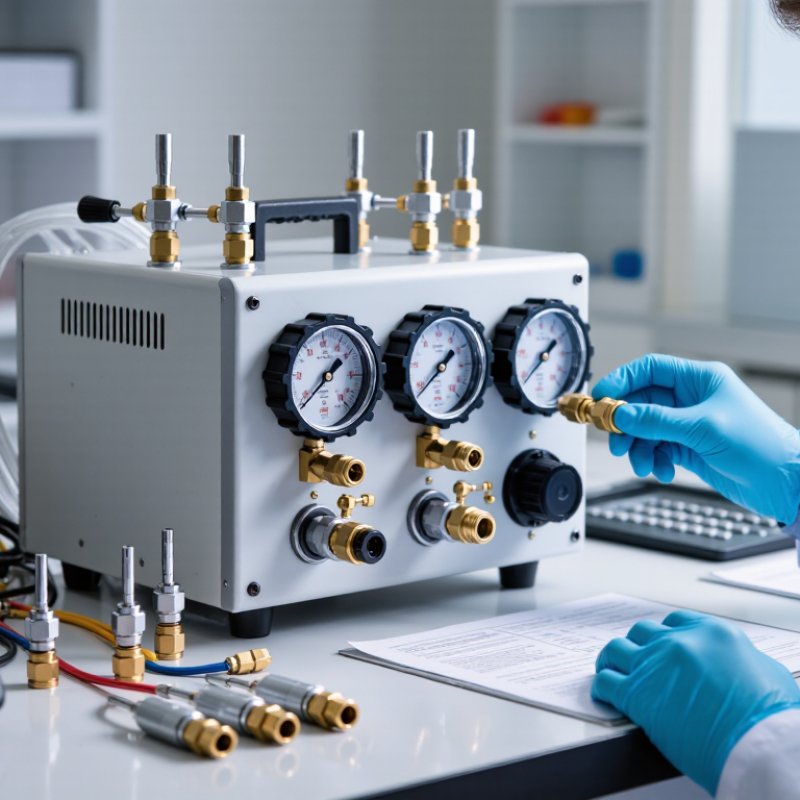
How to Choose a Pneumatic Pressure Calibrator?

Define the Purpose and Measurement Requirements

How to Choose a Pneumatic Pressure Calibrator?

Define the purpose before comparing specifications. Will the calibrator verify pressure gauges, test transmitters, or troubleshoot a pneumatic control loop? Each task demands different pressure ranges, connections, and accuracy levels. Start there. A workshop instrument may need stable bench operation, while field work requires low weight and a readable display. Record the expected minimum and maximum pressures, not just the system’s normal operating point. Occasional overpressure can damage an unsuitable sensor.

Measurement requirements should reflect the entire test process. Check accuracy, resolution, repeatability, and pressure stability together. A calibrator with impressive resolution may still provide weak results if its accuracy is poor. Consider the reference standard, working fluid, ambient temperature, and required calibration interval. Traceable certificates and documented test procedures strengthen measurement reliability. Small details matter, such as hose volume, fitting leakage, and whether the pump can reach pressure smoothly.

A practical selection also includes workflow. Can one technician generate pressure, read the reference, and record results without awkward repositioning? Data logging may reduce transcription errors, although it does not replace sound judgment. Keep it simple. I would question any choice based only on a brochure’s headline accuracy. Real conditions are messier: cold gloves, unstable supply pressure, and limited workspace can change performance. No calibrator is perfect, and the most expensive option may still exceed the actual requirement.

Compare Pressure Ranges, Accuracy, and Calibration Standards

How to Choose a Pneumatic Pressure Calibrator?

Compare pressure range, accuracy, and calibration standards before choosing a pneumatic pressure calibrator. The working point should sit near the middle of the selected range. For example, a 0–10 bar calibrator may appear suitable for a 1 bar transmitter, but its full-scale error can become significant. An accuracy of ±0.05% full scale equals ±0.005 bar, or 0.5% of a 1 bar reading. That difference matters in low-pressure testing. Resolution also deserves attention. A display showing 0.001 bar is useful only when the sensor and calibration uncertainty support it.

Accuracy is not the same as uncertainty. NIST Technical Note 1297 explains that a coverage factor of k=2 commonly represents approximately 95% coverage. Compare the calibrator’s expanded uncertainty with the device-under-test tolerance, not only the headline accuracy. A practical field lesson is easy to miss: a wider range improves flexibility, but often reduces confidence at small pressures. I would rather use a narrower range than carry unused capacity.

Tips: Check the pressure medium, leak stability, temperature effects, and connection fittings. Request calibration records from an ISO/IEC 17025-accredited laboratory when traceability is required. EURAMET pressure-calibration guidance also emphasizes documented uncertainty budgets and reference standards. Do not assume every certificate proves the same performance. Read the tested points, environmental conditions, and coverage statement carefully.

How to Choose a Pneumatic Pressure Calibrator?

Compare pressure ranges, accuracy, and calibration standards

Pressure range: Select a calibrator whose full-scale range is above the highest pressure to be tested, while keeping the operating point away from the extreme ends of the range.
Accuracy: Accuracy is shown as a percentage of full scale (% FS). A lower value generally provides better measurement capability, especially at low test pressures.
Calibration standards: For traceable results, use calibration performed by a laboratory operating to ISO/IEC 17025 and maintain measurement processes in accordance with ISO 10012.

Representative pressure ranges and accuracy classes commonly specified for pneumatic calibrators; confirm the exact operating limits and uncertainty on the instrument certificate and datasheet.

Evaluate Pneumatic Sources, Controls, and Pressure Stability

How to Choose a Pneumatic Pressure Calibrator?

A pneumatic pressure calibrator is only as reliable as its pressure source. The U.S. Department of Energy reports that compressed-air systems may lose 20% to 30% of output through leaks. That loss can create slow pressure recovery and unstable readings. Inspect the compressor, receiver, filters, tubing, and connectors before comparing calibrators. Moisture matters too. Water droplets can damage valves and distort low-pressure control.

Evaluate the control system under real working conditions. A good calibrator should reach the target pressure smoothly, without large overshoot or constant manual correction. Check both coarse adjustment and fine regulation. A practical test is simple: apply several pressure points, pause for 60 seconds, and record the drift. NIST Technical Note 1297 recommends reporting measurement uncertainty with a stated confidence level, commonly about 95% when coverage factor k equals 2. Your test records should include temperature, stabilization time, and reference uncertainty.

Pressure stability is often overlooked. A display can look impressive while the output quietly oscillates. I have seen this happen when a long hose was treated as harmless. It was not. Shorter tubing, stable ambient temperature, and sufficient isolation volume usually improve repeatability. ISO/IEC 17025 principles also support traceable equipment, documented methods, and competent personnel. Still, no specification replaces an on-site trial. The required pressure range, leak rate, and operator technique may expose weaknesses that laboratory brochures never show.

Check Compatibility, Portability, and Operating Conditions

Choosing a pneumatic pressure calibrator starts with compatibility, not advertised accuracy. Check the pressure range, media, fitting thread, and required reference uncertainty. A 1/4-inch port may not match a plant’s 1/8-inch instrument connection. Adapters can introduce leaks or contamination. ISO/IEC 17025:2017 stresses traceability and suitable calibration equipment, so confirm the calibrator’s certificate, uncertainty statement, and measurement standard.

Portability matters when technicians move between control rooms, workshops, and field equipment. MarketsandMarkets’ 2024 pressure sensor report projects the market to grow from about 15.8 billion dollars in 2024 to 22.4 billion dollars by 2029. More sensors also mean more varied test locations. A compact calibrator with a protective case, readable display, and battery indicator can reduce setup time. However, lighter is not always better. Small hand pumps may struggle near the upper pressure limit. I have seen operators underestimate this inconvenience.

Operating conditions deserve equal attention. Review the specified temperature, humidity, vibration, ingress protection, and allowable pressure media. EURAMET calibration guidance emphasizes environmental control because temperature changes can affect pressure measurement stability. A device rated for laboratory conditions may behave differently beside a compressor or inside a cold vehicle. Check warm-up requirements, leak-tightness, and battery performance before field deployment. The choice is rarely perfect. A useful improvement is recording actual site conditions during calibration, rather than relying only on the equipment datasheet.

Assess Software, Documentation, Maintenance, and Total Cost

How to Choose a Pneumatic Pressure Calibrator?

Software can determine whether a calibrator supports reliable daily work. Look for clear test sequences, automatic stabilization checks, and simple data export. A technician should create a record without repeating measurements. Audit trails matter when several people share one instrument. I also value adjustable tolerance limits and visible uncertainty calculations. Small screens can hide important warnings. That is easy to underestimate.

Documentation should explain setup, operating limits, sensor replacement, and leak testing. A useful manual includes real examples, not only technical definitions. Calibration certificates should show standards, uncertainty, environmental conditions, and traceability details. During a field check, missing information can delay acceptance for hours. I once found a procedure that ignored hose volume. The readings looked stable, but the response was slower than expected. That mistake changed our checklist.

Maintenance affects cost more than the purchase price. Check the availability of seals, filters, batteries, and repair support. Ask how often the pressure source needs cleaning. A damaged fitting can stop a job. Fast service helps, but it may cost more than expected. Calculate labor, recalibration, accessories, training, downtime, and software fees over several years. Compare the total cost per usable test, not just the invoice amount. A cheaper calibrator may create expensive interruptions. The estimate will still contain assumptions, so review them with technicians who use the equipment.

Go to Top