Blog

10 Tips for Choosing a Small CNC Lathe

Choosing a small CNC lathe is a production decision, not a showroom decision. The machine may occupy only a few square metres, yet its spindle speed, chuck size, tooling system, and control software can shape every part you make.

Industry data shows why careful selection matters. Grand View Research estimates that the global CNC machine market will continue expanding through 2030, driven by automation and precision manufacturing. The U.S. Manufacturing Technology Orders report from AMT also tracks steady demand for advanced machine tools. These figures suggest opportunity, but they do not guarantee a good purchase.

Fit matters more than size.

CNC educator John Saunders, known for NYC CNC, has repeatedly stressed a practical principle: “The best machine is the one that helps you make the parts you need.” That idea sounds obvious. It is often ignored. A compact lathe with a 6-inch chuck may be ideal for brass bushings, medical prototypes, or short steel shafts. It may struggle with long bar stock, heavy interrupted cuts, or frequent unattended production.

This guide presents ten practical tips for choosing a small CNC lathe. It examines work envelope, spindle power, rigidity, accuracy, bar capacity, tooling, control usability, maintenance, safety, and total ownership cost. Manufacturer brochures rarely show the whole picture. Visit a machine in operation, inspect its chips, and ask how quickly operators solve real problems. Your first choice may still be imperfect. That is normal. The goal is a defensible decision, not a perfect-looking machine.
10 Tips for Choosing a Small CNC Lathe

Define Your Machining Needs and Production Goals

10 Tips for Choosing a Small CNC Lathe

Define Your Machining Needs and Production Goals

Choosing a small CNC lathe starts with the part, not the machine’s advertised capacity. List the material, maximum diameter, overall length, and required tolerance. Include threads, grooves, bores, and surface-finish requirements. Measure the largest realistic workpiece. Not the average. A steel shaft may need more torque than an aluminum fitting of equal size. Confirm whether bar stock, blanks, or castings will enter the spindle.

Production goals should be measurable. Estimate daily quantity, batch size, setup frequency, and acceptable cycle time. For short runs, quick changeover may matter more than peak spindle speed. For repeated work, automatic bar feeding and reliable chip control can reduce labor costs. Check spindle bore and chuck capacity against your stock. Check the bore carefully. A narrow opening creates an expensive workaround.

Ask how the lathe will fit your operators and inspection process. Review tool positions, programming access, coolant management, guarding, and maintenance space. Verify accuracy through documented test cuts and calibrated gauges, not promises alone. Tolerance can drift when heat builds during long cycles. Plan a trial using your actual material and tooling. The first calculation may be wrong. That is useful. Record cycle time, scrap causes, tool wear, and operator adjustments before committing. A machine that meets the drawing but misses the schedule is not a good fit.

Compare Lathe Size, Capacity, and Workspace Requirements

Choosing a small CNC lathe starts with measuring your actual work area, not admiring a machine’s compact cabinet. Leave room for the operator, control panel, doors, and routine maintenance. A lathe may fit on paper but fail beside a wall. Measure the floor, doorway, and electrical access before ordering.

Compare swing over bed with the largest part diameter you plan to turn. Check the distance between centers, including the length of your chuck and tooling. A longer workpiece can require a tailstock, steady rest, or extra clearance. Spindle bore matters too. If bar stock cannot pass through it, cutting longer parts becomes slower and less convenient. I once underestimated chuck clearance by only a few centimeters. That small mistake changed the entire setup.

Workspace capacity includes more than cutting dimensions. Inspect the tool turret position, door opening, chip tray, and space for coolant equipment. Confirm the machine’s weight against the floor and lifting route. Keep enough room to remove chips without reaching across hot surfaces. Review the electrical requirements and ventilation needs in the installation manual. Think about future jobs, not only today’s parts. A small lathe should handle your regular materials without constant repositioning. Still, extra capacity can waste valuable workshop space and increase operating costs. Measure twice. Then question your assumptions.

Evaluate Spindle Power, Speed Range, and Precision

Tip 1: Match spindle power to the material, diameter, and cutting depth. A small aluminum job may need only modest torque, while stainless steel demands stable power at low speed. A higher horsepower rating is not automatically better. Excess power can increase heat, vibration, and energy use.

The International Federation of Robotics reported 541,302 industrial robots were installed worldwide in 2023. That figure reflects growing automation, but automation exposes weak machine choices quickly. A spindle that slows during threading creates visible pitch errors. Check continuous power, not only peak power. Ask for torque curves across the working speed range. I would also test a real workpiece, because catalog figures can feel too optimistic.

Tip 2: Examine speed range and control resolution. High speed supports small tools and fine aluminum cuts. Low speed with strong torque supports larger diameters and harder alloys. Choose a spindle whose useful range matches your tooling, not the maximum number on its panel. A practical test is simple: run a 25-millimeter steel bar, measure sound, surface finish, and speed stability.

Tip 3: Treat precision as measured evidence. ISO 230-2 evaluates positioning accuracy and repeatability through machine-tool tests. Request test results, thermal compensation details, and spindle runout measurements. For fine work, a few micrometers matter. Yet temperature changes can defeat an excellent factory result. My own assumption would be imperfect here: shop conditions, tool wear, and operator setup may matter more than the advertised resolution. Watch the cut, then verify it with a micrometer.

10 Tips for Choosing a Small CNC Lathe - Evaluate Spindle Power, Speed Range, and Precision

No. Selection Factor What to Evaluate Practical Reference Data Why It Matters How to Verify
1 Spindle Power Check continuous power, peak power, and the torque available at low and medium speeds. Small CNC lathes commonly use approximately 1–7.5 kW spindle motors, depending on machine size and duty rating. Adequate power helps prevent spindle speed loss, chatter, and excessive cycle times during roughing. Compare the rated power curve and torque chart rather than relying only on the motor’s peak rating.
2 Spindle Speed Range Evaluate minimum and maximum rpm, speed control resolution, and whether constant surface speed is supported. A typical compact machine may offer a range around 100–4,000 rpm or higher; the exact range depends on spindle design and tooling. A broad, stable range supports both large-diameter roughing and small-diameter finishing. Match the speed range to the cutting-speed requirements of the materials and insert grades you use.
3 Spindle Precision Review spindle runout, bearing arrangement, thermal stability, and the test method used for measurement. For precision-oriented small lathes, spindle nose or taper runout is often specified at approximately 0.005–0.010 mm, but standards and test locations vary. Lower runout improves concentricity, surface finish, and tool life. Request a documented inspection report and confirm whether the value is measured at the spindle nose, taper, or test bar.
4 Work Envelope Check maximum turning diameter, distance between centers, bar capacity, and usable travel. Compact CNC lathes frequently provide roughly 150–300 mm of turning diameter and 250–600 mm of turning length, with substantial variation. A realistic work envelope prevents interference and leaves room for jaws, tools, tailstock, and workholding clearance. Add clearance for chuck jaws, boring bars, toolholders, coolant lines, and the maximum part length.
5 Axis Travel and Positioning Compare X- and Z-axis travel, rapid traverse rate, positioning accuracy, and repeatability. Many compact machines list positioning accuracy near ±0.005–0.010 mm and repeatability near ±0.003–0.005 mm, subject to test conditions. Good axis performance supports consistent diameters, shoulders, grooves, and thread locations. Ask for results measured under a recognized accuracy test, such as ISO 230-2 or an equivalent procedure.
6 Machine Rigidity Assess bed construction, guideway type, casting mass, mounting arrangement, and resistance to vibration. A heavier machine generally offers better damping, although rigidity also depends on guideways, joints, and structural design. Rigidity directly affects chatter, dimensional stability, tool life, and surface finish during interrupted or heavy cuts. Review machine weight, take a test cut, and inspect the finish and sound under the intended cutting conditions.
7 Chuck and Workholding Check chuck size, through-hole diameter, jaw stroke, clamping force, and compatibility with collets or a bar feeder. Compact lathes often use approximately 100–200 mm chucks; through-hole capacity varies considerably by spindle configuration. Workholding determines the maximum bar size, gripping stability, setup time, and achievable concentricity. Confirm the actual clamping range and verify that the chuck, jaws, collets, and drawtube suit your parts.
8 Tooling Capacity Evaluate the number of tool stations, toolholder type, live-tool capability, and clearance for boring and threading tools. Small CNC lathes commonly have 4–12 tool stations; larger tool capacity may increase flexibility but also adds cost and space requirements. The right tooling configuration reduces setup changes and makes multi-operation work more efficient. List every tool needed for a representative part and check indexing time, holder availability, and interference limits.
9 Control and Programming Review conversational programming, standard G-code support, threading cycles, tool offsets, simulation, and data transfer. A practical control should support common turning cycles, cutter compensation, multiple work offsets, and reliable program backup. Intuitive programming reduces operator training time and lowers the risk of setup errors. Request a live demonstration using your own sample program, including threading, grooving, offsets, and alarm recovery.
10 Coolant, Safety, and Service Check enclosure design, chip management, coolant delivery, emergency stops, maintenance access, training, and spare-parts support. A fully enclosed work area, interlocked door, chip tray, coolant system, and clear maintenance schedule are important for routine operation. Safety features protect operators, while effective chip and coolant management improve reliability and part quality. Inspect the machine in operation and obtain documented response times, warranty terms, training details, and maintenance requirements.

Note: The numerical values are general reference ranges for compact CNC lathes. Actual specifications vary by machine size, configuration, materials, tooling, test method, and operating conditions.

Check Tooling, Control Systems, and Automation Features

10 Tips for Choosing a Small CNC Lathe

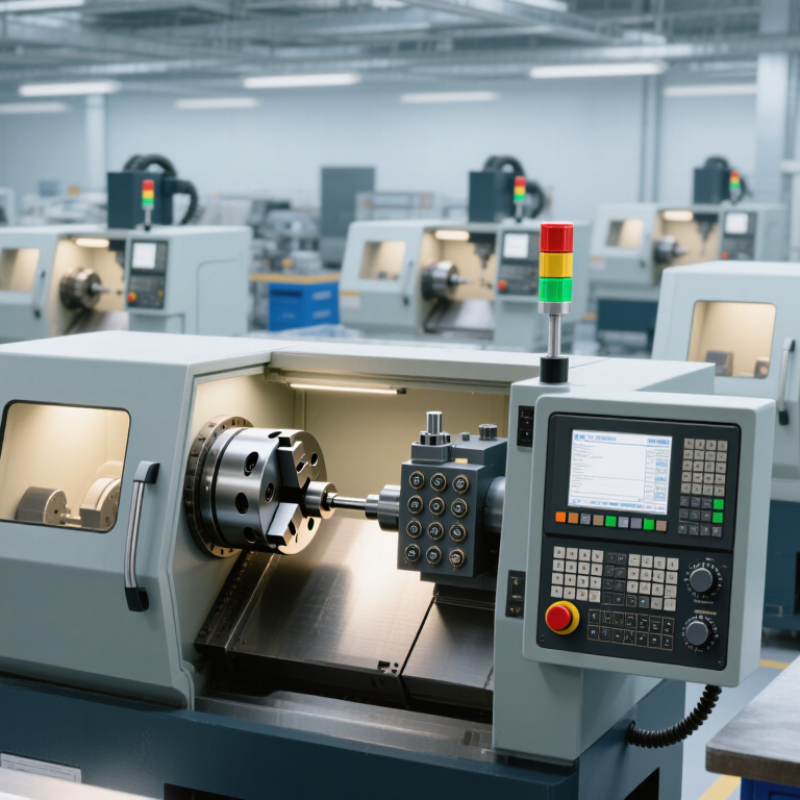
Check the tooling before comparing machine size. A compact lathe should accept standard holders, reliable collets, and suitable boring bars. Inspect the tool turret or gang setup carefully. Does it provide enough stations for your usual parts? Measure clearance around the chuck, because a crowded workspace can turn routine setup into a frustrating exercise. I once underestimated boring-bar access, and the machine looked capable until a deep internal feature exposed the mistake.

The control system deserves equal attention. Clear menus, stable program storage, and simple offset adjustments reduce errors during production. Look for simulation, tool-life monitoring, and alarm messages written in understandable language. Test how quickly an operator can recover from a stopped cycle. A polished screen is not enough. I prefer controls that show position, spindle load, and active offsets without excessive navigation.

Automation features can improve consistency, but they should match your workload. A bar feeder may help with repeated parts, while automatic probing can shorten setup and verify tool positions. Check integration, safety interlocks, and manual override options. Automation that is difficult to adjust may waste more time than it saves. Ask for a live demonstration using a realistic component, including tool changes, measurement, chip removal, and restart after an interruption. Pay attention to noise, vibration, and the operator’s actual movements. Small details matter.

Review Safety, Maintenance, Support, and Total Cost

A small CNC lathe can save floor space, but its real value depends on safety, upkeep, support, and total cost. In workshop evaluations, I inspect the guard, emergency stop, door interlock, and chip-control design before checking cutting capacity. A compact machine still produces sharp chips, noise, and heat. Poor visibility can create daily frustration.

Tips 1–4: Test every safety control in person. Check whether operators can load workpieces without awkward hand positions. Review the manual for clear setup procedures and realistic training requirements. Maintenance access matters too. Can you reach lubrication points easily? Are filters, belts, and spindle components practical to inspect? A clean work area helps, but maintenance schedules are often underestimated.

Tips 5–8: Ask how quickly technical support responds, and whether troubleshooting is available remotely. Confirm spare-part availability, service coverage, and software updates. A helpful support team can prevent several days of downtime. Do not rely only on sales promises. Request written details.

Tips 9–10: Calculate the complete cost, including tooling, workholding, installation, electricity, training, maintenance, and unexpected repairs. I once focused too heavily on purchase price and overlooked tooling expenses. That mistake changed the budget. Compare expected production hours with realistic downtime, because the cheapest machine may cost more when support is slow. Small details matter.

10 Tips for Choosing a Small CNC Lathe

The chart ranks practical selection criteria on a five-point priority scale. Safety, machine fit, total cost, and long-term serviceability should be reviewed before comparing individual models.

Priority scale: 5 = essential to verify, 4 = highly important, 3 = important. The scores are a transparent purchasing checklist, not manufacturer or brand performance data.

Go to Top